
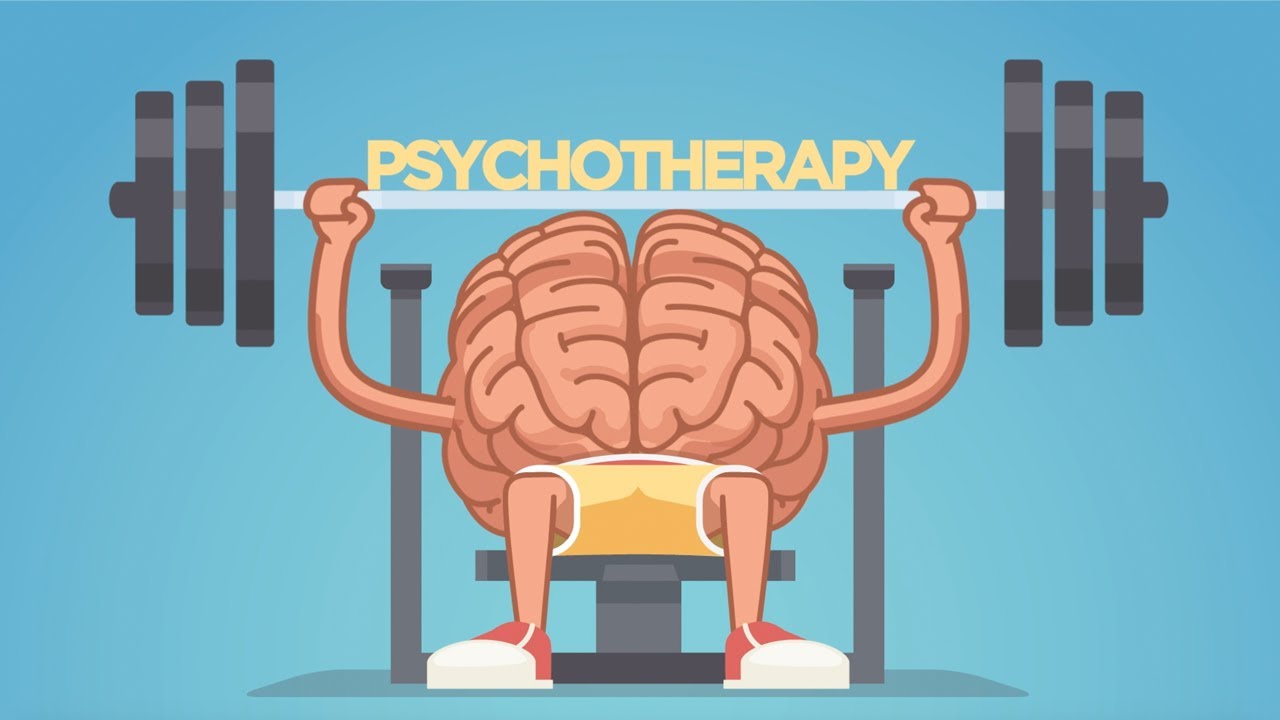
“A theory of psychotherapy acts as a roadmap for psychologists: It guides them through the process of understanding clients and their problems and developing solutions.”
“Talk therapies lead to the reintegration of neural systems involved”
“What Is Psychotherapy? Psychotherapy, also called talk therapy, is a type of mental health treatment. It’s often used either … “
“The terms “counselor” and “psychotherapist” are often used interchangeably and have many similarities, but there are some important differences as well.”
Lorem ipsum dolor sit amet, consectetur adipiscing elit. Ut elit tellus, luctus nec ullamcorper mattis, pulvinar dapibus leo.
Lorem ipsum dolor sit amet, consectetur adipiscing elit. Ut elit tellus, luctus nec ullamcorper mattis, pulvinar dapibus leo.
Lorem ipsum dolor sit amet, consectetur adipiscing elit. Ut elit tellus, luctus nec ullamcorper mattis, pulvinar dapibus leo.
Lorem ipsum dolor sit amet, consectetur adipiscing elit. Ut elit tellus, luctus nec ullamcorper mattis, pulvinar dapibus leo.
Lorem ipsum dolor sit amet, consectetur adipiscing elit. Ut elit tellus, luctus nec ullamcorper mattis, pulvinar dapibus leo.
Lorem ipsum dolor sit amet, consectetur adipiscing elit. Ut elit tellus, luctus nec ullamcorper mattis, pulvinar dapibus leo.
Lorem ipsum dolor sit amet, consectetur adipiscing elit. Ut elit tellus, luctus nec ullamcorper mattis, pulvinar dapibus leo.
Lorem ipsum dolor sit amet, consectetur adipiscing elit. Ut elit tellus, luctus nec ullamcorper mattis, pulvinar dapibus leo.
Lorem ipsum dolor sit amet, consectetur adipiscing elit. Ut elit tellus, luctus nec ullamcorper mattis, pulvinar dapibus leo.
Lorem ipsum dolor sit amet, consectetur adipiscing elit. Ut elit tellus, luctus nec ullamcorper mattis, pulvinar dapibus leo.
Lorem ipsum dolor sit amet, consectetur adipiscing elit. Ut elit tellus, luctus nec ullamcorper mattis, pulvinar dapibus leo.
Lorem ipsum dolor sit amet, consectetur adipiscing elit. Ut elit tellus, luctus nec ullamcorper mattis, pulvinar dapibus leo.
Lorem ipsum dolor sit amet, consectetur adipiscing elit. Ut elit tellus, luctus nec ullamcorper mattis, pulvinar dapibus leo.
Lorem ipsum dolor sit amet, consectetur adipiscing elit. Ut elit tellus, luctus nec ullamcorper mattis, pulvinar dapibus leo.
Lorem ipsum dolor sit amet, consectetur adipiscing elit. Ut elit tellus, luctus nec ullamcorper mattis, pulvinar dapibus leo.
Lorem ipsum dolor sit amet, consectetur adipiscing elit. Ut elit tellus, luctus nec ullamcorper mattis, pulvinar dapibus leo.
Tell people more about the services you offer. Use this repeating layout to display content. It’s an easy way to keep your customers up to date with what’s happening. Want to make this content your own? Simple drag and drop elements like text, images and links, or connect to data from your collection.
With our free, medically-reviewed assessments, you can take a proactive approach to your mental health and well-being. Our library offers an array of options, indluing but not limited to Anxiety, Bi-polar, Alcholism, PTSD, ADHD and OCD assesments.
As you navigate our programs, you will be introduced to a plethora of resources to assist you in a variety of mental health domains. We provide both paid and free services, and we encourage you to explore much of the information on your own. Our self-assessments provide an in-depth look into your own psychology and aid in self-awareness
The Empowerment Community envisions a future in which children are protected from psychological and emotional harm, families are supported with evidence‑based interventions, and systems entrusted with child welfare are equipped to distinguish accurately between parental alienation, estrangement, and justified estrangement. We believe children thrive when they are free from coercive dynamics, misinformation, and loyalty conflicts—and when decisions affecting their lives are grounded in research, ethics, and compassion.
Our vision is a cultural and systemic shift: one where family‑systems science, empirical data, and trauma‑informed practice guide courts, professionals, and communities toward outcomes that prioritize child well‑being and long‑term relational health.
The mission of The Empowerment Community is to educate, equip, and advocate using research‑based, solution‑focused approaches to address parental alienation and high‑conflict family dynamics.
We work to:
Increase public and professional understanding of the critical distinctions between parental alienation, estrangement, and justified estrangement
Provide empirically informed tools and frameworks that support accurate identification, early intervention, and child‑centered decision‑making
Reduce the long‑term psychological harm to children caused by coercive control, chronic conflict, and systemic misunderstanding
Promote ethical, trauma‑informed responses within courts, mental‑health systems, schools, and communities
All of our education, resources, and recommendations are rooted in established psychological research, family-systems theory, attachment science, and peer-reviewed literature. We emphasize evidence over ideology and data over narrative.
The Empowerment Community is not awareness-only. We are committed to practical, actionable solutions that:
Interrupt harmful dynamics early
Restore healthy parent-child relationships when safe and appropriate
Support accountability and healing rather than blame or polarization
We emphasize the essential differences between:
Parental Alienation – a pattern of coercive control in which a child is manipulated to reject a loving parent without legitimate justification
Estrangement – a relational rupture that may arise from conflict, misunderstanding, or unresolved emotional injury, and requires the parent to take initiative in acknowledging harm, rebuilding trust, and creating space for reconnection.
Justified Estrangement – distance that is protective and appropriate in cases of sexual abuse, neglect, or ongoing physical harm
Accurate differentiation is critical to protecting children, supporting survivors of abuse, and preventing further trauma through misdiagnosis or system failure.
We actively challenge the normalization of polarizing, adversarial behavior in high-conflict divorce and custody disputes. Through clinically informed screening, education, and professional training, we help systems move beyond false binaries and adversarial narratives that obscure abuse, entrench conflict, and harm children.
Children’s psychological safety and developmental needs are at the center of all our work. We recognize that prolonged exposure to loyalty binds, role reversal, coercive control, and chronic conflict constitutes a serious mental-health risk.
Education & Awareness: Develop accessible, research-based educational content for parents, professionals, and the public that clarifies the distinctions between parental alienation, estrangement, and justified estrangement and challenges the normalization of polarizing behavior in high-conflict divorce
Advanced Screening & Assessment: Utilize Lilly J. Landakusic, LMFT’s clinically informed screening tools, which are game-changing in their ability to identify coercive control, hidden abuse dynamics, and the true source of family dysfunction. These screeners are designed to move beyond surface narratives and binary thinking, allowing professionals to accurately assess where harm is originating and how it is being maintained within the system
Professional Training & Best Practices: Develop and deliver best-practices training programs for mental-health professionals, attorneys, judges, guardians ad litem, mediators, police officers, and allied professionals. Our trainings emphasize empirically supported frameworks, ethical decision-making, and practical application in real-world high-conflict cases
Continuing Education: Create accredited continuing-education (CE) programs, led and informed by licensed clinical expertise, that equip professionals with the tools to interrupt polarization, identify coercive dynamics, and respond appropriately without reinforcing harmful family patterns
Systems Advocacy: Promote policy reform and institutional best practices that reflect current research, discourage false equivalence between parents, and prioritize child psychological safety over adversarial positioning
Family Support Resources: Offer structured, solution-oriented guidance that helps families navigate high-conflict dynamics while centering child well-being
The Empowerment Community is committed to elevating the conversation beyond denial, polarization, and oversimplification. By grounding our work in empirical data, ethical clarity, and compassion, we aim to protect children, support healthy family relationships, and contribute to meaningful systemic change.
We believe that when truth is clearly defined and solutions are responsibly applied, families—and future generations—can heal.